Sitetime
July 2025 – December 2026
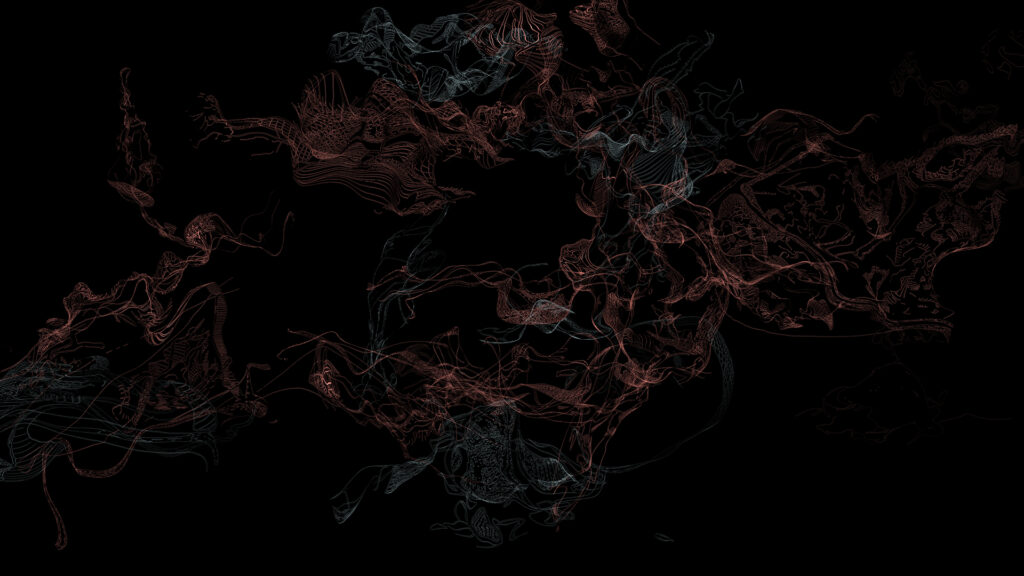
Sitetime by Annabel Howland, takes arbuscular mycorrhizal fungi as a lens to examine landscapes, coasts, and habitats.
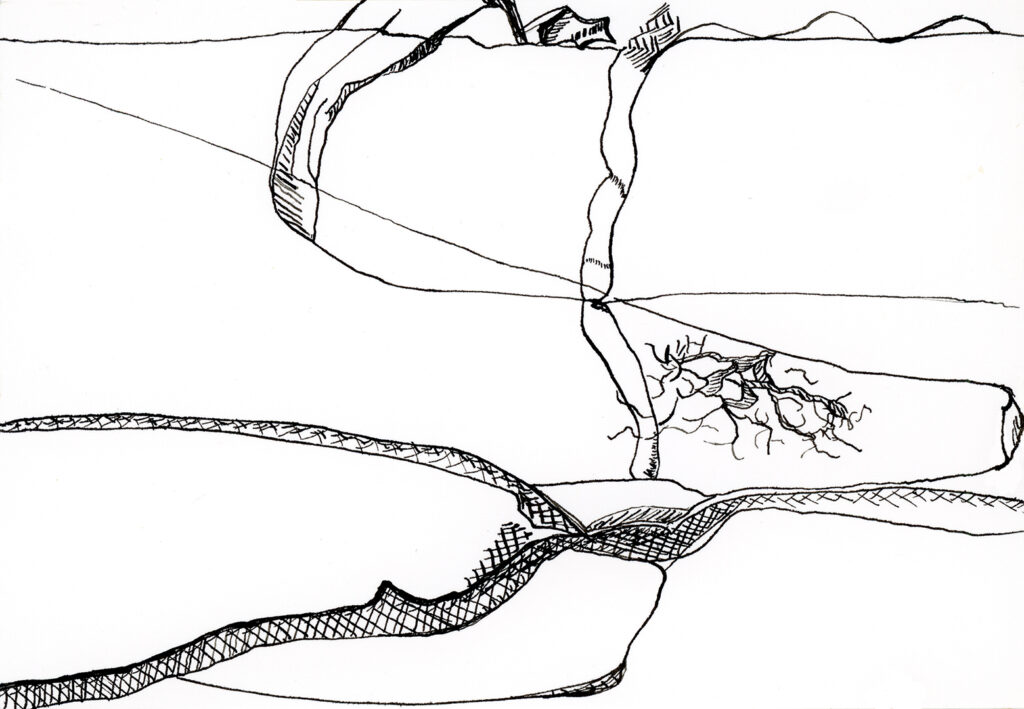
Arbuscular mycorrhizal (AM) fungi are key indicators of soil health and vital to counteracting climate change: 70%-90% of all terrestrial plant life depends on fungal networks to survive, and 59% of biodiversity on earth is estimated to be in soil. The arbuscules at the heart of this association—treelike or coiling structures that AM fungi grow inside the cells of plant roots— are tiny and temporally dynamic, growing and collapsing in a matter of days. These fungi transport water to plants through their networks, enhancing water storage in arid or sandy soils, while encouraging drainage in loamy soils that are prone to sogginess. In farming, artificial fertilisers remove a crop’s need for mycorrhizal fungi. This affects the plant’s ability to draw vital nutrients out of the soil and to survive drought or wet. It reduces soil biodiversity, weakening resilience to pests and infection.
Sitetime, by Annabel Howland, takes arbuscular mycorrhizal fungi as a lens to examine landscapes, coasts, and habitats. AM fungi provide a starting point for conversations with a wide range of farmers (intensive, organic, regenerative, vertical) and others in East Anglia and the Netherlands. Annabel collects root samples from crops, which are then analysed at the Vrije Universiteit in Amsterdam and the Cambridge Crop Science Centre. This enables her to reveal for farming communities the invisible structures and systems working in symbiosis with their crops (or weeds) and opens up opportunities for conversations on many scales, to navigate the subjective and objective complexities of living in changing and threatened landscapes.
Sitetime also includes research with AM fungi in the dunes that frame the North Sea in the east of England and west of the Netherlands. The farmland that lies directly behind dunes and dikes is particularly vulnerable to salination and sea-level rise. These North Sea neighbours have thousands of years of commercial and cultural exchange in common, and shared experiences of North Sea storms, floods and coastal erosion.
The project contributes to the Living in Changing Landscapes research theme and provides a strengthened bridge between Norwich and the Netherlands. Through working with agricultural communities in East Anglia and the Netherlands, there is the potential for impact around the challenges of transition, bringing both human- and more-than-human perspectives.
Talks
Annabel Howland and Dr Jen McGaley. ‘Arbuscular Time and Subterranean Weather’, 4 October 2025, Fungi Field Day, Cambridge University Botanic Garden
Dr Vasilis Kokkoris and Annabel Howland. ‘Seeing Soil Live’, 13 November 2025, Environmental Humanities Center Amsterdam
Exhibitions
‘Sitetime / Ortzeit’, 29 August – 14 September 2025, Onomato Künstlerverein, Düsseldorf.
Project team
-
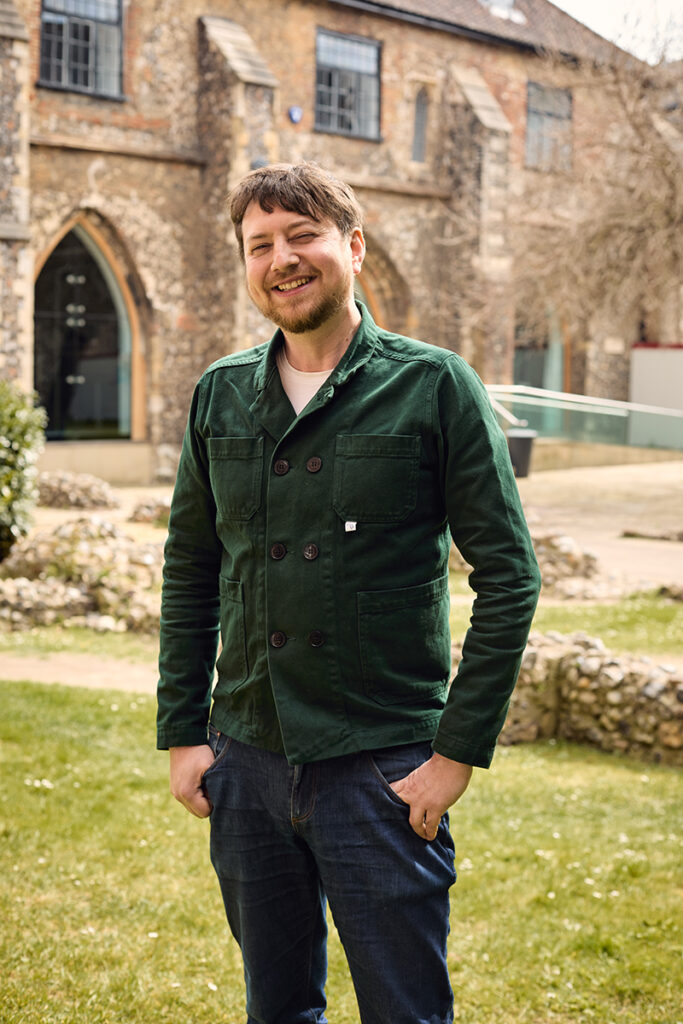
Annabel Howland
Affiliated researcher with the Institute for Sustainable Worlds
View profile (opens in a new window)