PhD studentship: For the Public Good
Exploring the power of community engagement, co-production and innovative creative practice at the Museum of Norwich.
Key information
- Start date: 1 October 2026
- Application Deadline: Friday 1 May 2026
- Online information session on Wednesday 15 April, 7 – 8pm BST
- In-person information session on Saturday 25 April, 2 – 4pm BST at the Museum of Norwich
- Interviews are expected to take place online on Thursday 4 June 2026
Norwich University of the Arts and the Museum of Norwich (part of Norfolk Museums Service) are pleased to announce a fully-funded Collaborative doctoral studentship, from October 2026, under the AHRC’s Collaborative Doctoral Partnership Scheme.
This project will be jointly supervised by Dr Nicola Simpson and Professor Dan Lockton at Norwich University of the Arts, and Hannah Henderson and Louisa Wickham at Norfolk Museums Service. This research studentship is one allocated to CC-EE by the AHRC. The student will undertake research at the Museums of Norwich and associated collections, and Norwich University of the Arts as well as becoming part of the wider cohort of CDP-funded students across the UK.
Eligibility
- We encourage applications from a diverse range of people, from different backgrounds and career stages
- Students could have a master’s degree, or should be able to demonstrate relevant equivalent experience
- The studentship is open to both home and international applicants
- The studentship can be studied either full or part-time
- Further details below in section ’Eligibility’
Project overview
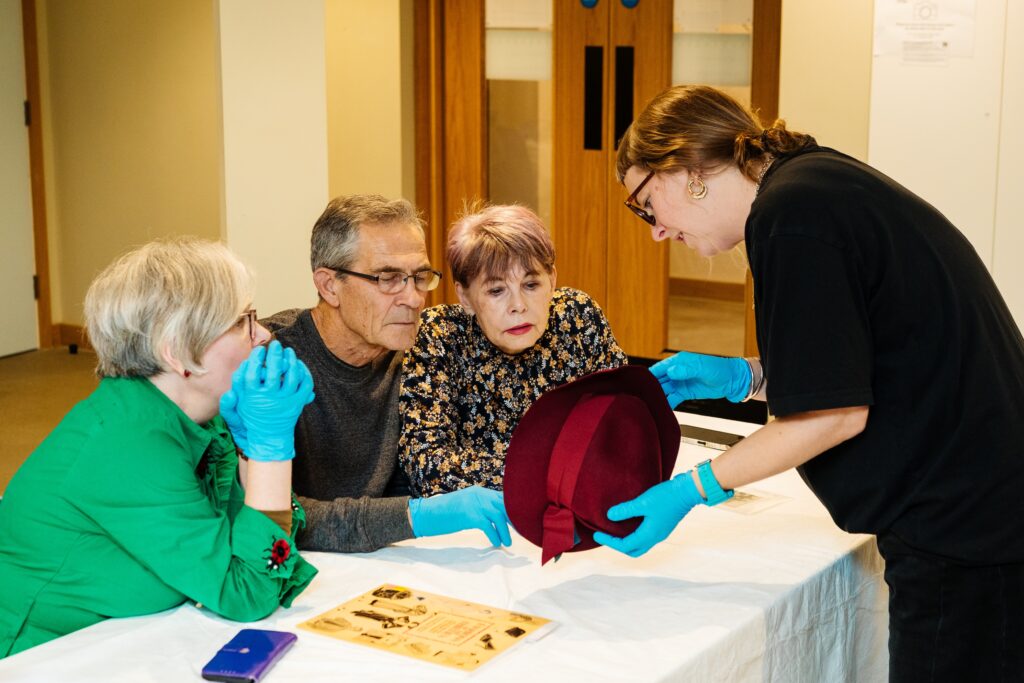
This collaborative PhD aims to reimagine how a museum with place-based collections can resituate itself through co-production with under-represented communities. The project explores how community-led and inclusive museum practice can reshape what museums do and who they serve. It focuses on collective cultural memory and co-production with communities, including the potential to build micro-collections of local communities’ personal possessions. As a repository of objects often donated by historically dominant groups, the Museum of Norwich faces challenges in representing diverse experiences. This collaboration offers a powerful opportunity to rethink what museums are and who they serve.
As a practice‑based PhD, the project will include your own creative work, such as exhibitions, events, design, fine art, film, performance or photography, alongside a written thesis. The thesis will encompass both the creative work (or its documentation) and the written analysis that contextualises it.
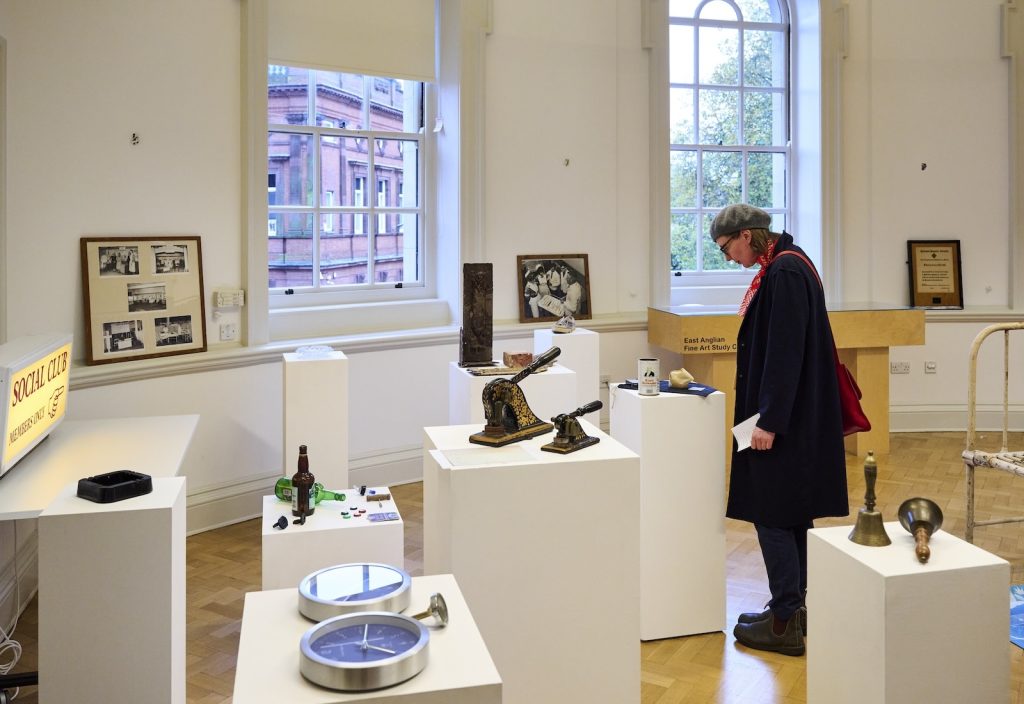
The Museum’s mission is to tell the story of Norwich and its people through an inclusive lens, using diverse collections to reflect the city’s social, industrial, and artistic evolution. Its current practice of putting objects on display plays a huge role in the visibility and recognition of people associated with those objects. The Museum’s social history collections are often a starting point for community engagement: everyday objects, and personal stories around them can transform collections into powerful, emotionally resonant displays. Since its redevelopment in 2012, the Museum has built partnerships with expert practitioners and welcomed collaborative practice, hosting a community engagement programme unique in the region. Recent exhibitions and projects, exploring marginalised communities’ stories, such as Norwich’s Islamic and Jewish communities, and those living with dementia or mental poor health, demonstrate the emotional impact of being seen in public spaces. These moments of recognition foster health and wellbeing, belonging and challenge notions of museums as only for privileged or historically dominant groups.
The project will situate The Museum of Norwich as a site of local community dialogue with objects and collections. Micro-collections, personal possessions not typically viewed as ‘museum-worthy’, will allow people to share stories in ways that are emotionally resonant and culturally significant. By centring creative co‑production and lived experience, the project will explore how tacit and embodied knowledge can shape new understandings of museum collections. Drawing on innovative practice, including work such as The Unmuseum Cultural & Heritage Programme, it will examine how communities can define, share and reinterpret cultural heritage on their own terms.
The methodology takes an exploratory, mixed-methods approach, rooted in creative arts research: practice-led enquiry where form and focus emerge through a constructivist stance, supporting discovery of patterns and meaning through engagement. As a practice-based PhD, outputs include a written thesis of c.40,000 words and substantial practice component embodying new knowledge, such as community-based research, exhibitions (in the museum, in the community and online), artefacts and photography, community events and methods, alongside publications.
The project will run across three stages: development, co-design and delivery. During the development stage, the student will be supported in identifying potential collection and community links. The museum houses collections including social history, trade and industry, art, costume, and textiles; the student will have access to displayed works, and to Norfolk Museums Service stores, and be trained on collections management software, enabling their own independent research into patterns of collecting and objects. In the co-design stage, the student will work with community group(s) to creatively recentre their lived experience within existing collections and reimagine inclusive collection practice and storytelling around this collecting. In the delivery stage, new personal/co-produced groupings of objects and micro-collections could be exhibited in constellation community sites or other museum spaces.
Health and wellbeing is a cross-cutting theme. Research from World Health Organisation, and other creative health studies, show how arts engagement supports wellbeing. The project will draw on Norwich University of the Arts’ expertise in creative health to explore how museum–community work can positively affect both physical and mental health and wellbeing.
Research questions
Research questions include:
These gaps and opportunities are addressed through the research questions:
1) What can we learn about increasing community engagement with museums, through exploring collective cultural memory and a focus on the practice of collecting itself?
2) How can a reframing of collecting as a creative, participatory act reflect the lived experiences of Norwich residents past and present?
3) What is the potential of micro-collections, micro-catalogues, and distributed collections as creative tools for engagement?
4) How can a focus on members of the public as the collectors and story tellers support inclusive health and wellbeing outcomes?
Benefits and opportunities
It is anticipated this project will largely be based on-site in Norwich and the student will have a desk at Museum of Norwich, and in the postgraduate research hub at Norwich University of the Arts, with travel to other Norfolk Museums Service (NMS) sites for training, collaboration and events. Day-to-day supervision of the student within the Museum of Norwich will sit with Hannah Henderson, Curator of Community History at the Museum of Norwich, supported by the wider Norwich Museums team which includes the Teaching Museum Manager, learning and collections teams.
The candidate will also work with the supervisors to create a study plan including key milestones in the PhD journey, and a Learning and Development action plan. The candidate will be able to access a wide range of training opportunities in addition to those provided by CC-EE and events including the Museums Association annual conference. They will also take part in a programme of research training courses through Norwich University of the Art’s partnerships with the University of the Arts London and University of East Anglia and present their work once a year in the Norwich University of the Arts Research Conversations series, with feedback from the wider academic community.
Hybrid and flexible options will be available to make the opportunity as inclusive as possible, and support candidates who might have caring responsibilities or parental responsibilities.
Nicola Simpson and Dan Lockton, Institute for Sustainable Worlds at Norwich University of the Arts, will develop the student’s academic skills including literature reviews, data collection and academic writing. Norwich University of the Arts provides a range of student support services including medical/health, wellbeing, disability and learning, library/study skills, and finance. Study Skills help is available as bookable tutorials, drop-in or workshops.
Depending on the direction of the PhD, NMS teams can provide support in a wide range of areas such as working with museum artefacts, collections and conservation care, historical interpretation, local studies research, exhibition creation and delivery, audience development and community engagement programming, events management, social media communications, intergenerational and youth engagement programmes, community partnerships, volunteering programmes, working with artists, arts fundraising, and formal and creative evaluation techniques.
The student will benefit from being part of a wider PhD community within NMS, as we already have two students as part of the CC-EE programme.
The successful candidate will also be encouraged to participate in professional development events and activities organised for all Collaborative Doctoral Partnership students who are registered with different universities studying with cultural heritage organisations across the UK. These activities are organised by a coordination team based at the V&A and are designed to provide CDP researchers with the knowledge, networks and skills to thrive in their future careers.
Details of award
CDP doctoral training grants fund full-time studentships for four years or up to eight years if studied part-time (0.5 FTE). This period will include development activities and relevant work experience placements. The academic year for Research Degrees covers a full year from 1 October – 30 September.
The award pays tuition fees up to the value of the full-time home UKRI rate for PhD degrees. This £5,238 for the academic year 2026-7.
Students with an ‘overseas’ fee status are welcome to apply but will need to pay the difference between the UK and overseas fees rate.
The fee for international students in 2026-27 is £18,000, therefore the student will need to pay £12,762 in 2026-27 and will be required to reside in the UK until completion of the PhD. Fees for future years of study may be subject to inflation.
The award also pays an annual stipend for all students, both home and international students. The UKRI National Minimum Doctoral Stipend for 2026-2027 is £21,805. This stipend is tax free, and is the equivalent of an annual salary, enabling the student to pay living costs.
The successful candidate will also have access to an AHRC Research Training and Support Grant (RTSG) of £750 per year, (pro-rata for part-time students). This can be used to support study visits, conference attendance, training and development opportunities, which are necessary for the student’s primary research. In addition, the award provides a CDP maintenance payment of £600 per year supporting additional costs students incur whilst undertaking a collaborative award. Further details can be found on the UKRI website.
The student is eligible to receive an additional travel and related expenses grant during the course of the project courtesy of Norfolk Museums Service worth up to £2,000 per year for 4 years, or pro rata for part-time students. Norwich University of the Arts also provides access to a Research Student Support Fund for costs associated with research degree study.
If you are an international student, please be aware that there may be additional fees (e.g. UK student visa, Immigration Health Surcharge). For all enquiries contact the Research Degrees Administrator.
If you have a disability, you may be entitled to a Disabled Students’ Allowance (DSA) on top of your studentship. DSA helps to cover the cost of any additional support that a person studying for a doctorate might need as a result of a disability, mental health problem or specific learning difficulty.
Eligibility
This studentship is open to both Home and International applicants.
To be classed as a home student, candidates must meet the following criteria:
- Be a UK or Irish National (meeting residency requirements),
- or Have settled status,
- or Have pre-settled status (meeting residency requirements),
- or Have indefinite leave to remain or enter
- The latest revision of the AHRC Training Grant Funding Guide is available here.
We want to encourage the widest range of potential students to study for a CDP studentship and are committed to welcoming students from different backgrounds to apply. We are keen to hear from individuals with varied expertise who can bring unique perspectives to the studentships. Experiences beyond academia, including other experience in a professional setting are also highly valued; this includes diverse lived experiences and those with an understanding of diverse research practices, outputs, impacts and engagement practice. We encourage applicants from all backgrounds to apply, even if you are not certain that you meet every criterion. We particularly welcome applications from people of Global Majority backgrounds as they are currently underrepresented at this level in this area.
The typical minimum entry requirement is an upper second-class honours degree in a relevant discipline. An MA in an appropriate subject is considered particularly valuable preparation for a research degree, but candidates will be considered who can demonstrate equivalent experience in a professional setting. Suitable disciplines are flexible but could include Fine Art, Design, Curation, Community Studies, Heritage, History, Health and Mental Health, Social History. All disciplines will be considered.
Successful applicants are invited to an interview online. Applicants are also strongly encouraged to attend the information sessions available in April 2026.
We are looking for applicants with passion, dedication and enthusiasm for the topic of the studentship, and potential and enthusiasm for developing skills in the museums, heritage and cultural sectors.
For non-UK applicants – An English Language Test (ELT) score which meets the University’s requirements for the Research Degrees Programme: either an IELTS minimum overall test result score of 7.0 with a 7.0 in writing and with no other component score lower than 6.0, or an equivalent test score. Test scores should be as recent as possible (i.e. no more than two years prior to the date that you would first enrol in the Research Degrees Programme). Please note: International students are required to be full-time due to Visa restrictions.
NB. All applicants must meet UKRI terms and conditions for funding
How to apply
Please send a completed application form, and supporting documents to researchdegrees@norwichuni.ac.uk by Friday 1 May 2026.
Shortlisted applicants will be invited to an online interview on Thursday 4 June 2026.
At the interview, applicants will be asked to give a short 5–10-minute presentation about their ideas for the project at the beginning of the interview, and will be asked the following core questions:
- Please tell us about your project ideas and how you will undertake your research. (Presentation)
- Why have you chosen to this PhD?
- Can you identify any ethical considerations at this point of your project?
- Can you identify any specific training needs or resources required to complete your research?
The panel will also ask follow-up questions of their own.
Once an offer has been accepted, the successful student will be required to undergo an enhanced disclosure (criminal records check) and an ID check. The enhanced disclosure check is required as the student will be working with community groups which could include children and vulnerable adults. They may also supervise volunteers.
Please let us know if you require any adjustments for the application process or interview. Support or adjustments may include, but are not limited to:
- Opportunity to speak with project supervisors at HEI and CDP Award Holder about the project and the process.
- Opportunity to speak with contacts within the HEI and/or CDP Award Holder regarding institutional support systems (e.g. neurodiversity, racial diversity and LGBTQIA+ networks, mental health support, support for carers).
- Access to interview questions and an insight into the interview process (e.g. selection criteria used).
Your application will not be adversely affected by disclosing a disability, and it will be processed in exactly the same way as any other application.
The central CDP team ask all applicants to complete a voluntary EDI monitoring form. All responses are anonymous. EDI information is also captured and stored separately via the University’s application form.
Contacts and informal enquiries
Applicants are encouraged to contact the supervisory team with informal enquiries about the studentship:
- Nicola Simpson and Dan Lockton, Institute for Sustainable Worlds, Norwich University of the Arts: n.simpson@norwichuni.ac.uk and d.lockton@norwichuni.ac.uk
- Hannah Henderson and Louisa Wickham, Norfolk Museums Service: Hannah.henderson@norfolk.gov.uk and louisa.wickham@norfolk.gov.uk
Please contact the Research Degrees administrator if you have any questions about the application process:
- Hannah Bedford: researchdegrees@norwichuni.ac.uk
If you would like to speak with active CDP students to ask questions regarding student experience as part of the CDP scheme, please contact Sarah Villis at cc-ee@fitzmuseum.cam.ac.uk
All CDP projects are part of a nationwide programme called the Collaborative Doctoral Partnership consortium. The CDP consortium will host an online webinar for prospective applicants on 13 April 2026 at 11:00. This webinar will provide an overview of the CDP funding scheme.
To sign up for a webinar, please email cdp@vam.ac.uk with the subject line “Prospective Applicant Webinar” from the email address you would like to join the online meeting from. Sign up will close on 10 April 2026 at 17:00.
Please note, this webinar will not focus on individual projects.
Find out more
Have questions about the application process, or want to find out more about research degrees at Norwich?
Get in touch.