Campus and operations
Ethical banking and investment
Ethical banking policy
The University has a Treasury Management and Ethical Banking policy which is approved and reviewed by the Finance & Resources committee of the governing body. The policy was last approved in February 2026. The key elements of the policy with regard to ethical banking are provided below:
Our banking arrangements shall be made to obtain the best financial return for the University, while being consistent with a responsible and ethical approach to investment, and seeking to minimise the risk of loss of funds.
The University will strive to partner with banks and financial institutions that demonstrate:
- Environmental Responsibility: Commitment to minimising environmental impact, including avoiding investments in fossil fuels, deforestation, or other environmentally destructive activities. Preference is given to institutions that invest in renewable energy and sustainable practices.
- Social Responsibility: Engagement in fair labour practices, equitable treatment of all employees, and support for community welfare, both locally and globally.
- Governance and Transparency: Adherence to best practices in governance, with clear policies on anti-money laundering (AML), anti-corruption, and transparent reporting of investments and activities.
When selecting banking partners, the University will prioritise institutions that:
- Have publicly available ESG policies and commitments.
- Achieve a score of at least 25 out of 100 on the Ethical Consumer website (Ethical Consumer: the alternative consumer organisation) (this means achieving at least an ‘amber’ rating)
- Demonstrate transparency in their investments and avoid sectors that conflict with the university’s ethical values, such as fossil fuels, weapons manufacturing, and exploitative industries.
- Are actively contributing to sustainable development goals (SDGs) and have policies supporting local and global communities.
To ensure continuous alignment with this policy, the University will:
- Review banking relationships annually, assessing alignment with the University’s values and policies.
- Encourage banking partners to enhance their ESG practices by engaging in dialogue and offering feedback.
- Consider transitioning to alternative banking partners if a current partner fails to meet the university’s ethical standards after an evaluation and engagement process.
Ethical investing
See a copy of the University’s Investment Policy:
As well as its more general Investment Policy, the University also has a separate ‘Responsible Investment policy’. This policy is provided in full below:
“The University strives to ensure that it makes investments in a responsible and ethical way.
Investments shall be made to obtain the best financial return for the University, while being consistent with a responsible and ethical approach to investment.
Specifically, the University will only invest in entities that exhibit best class standards of behaviour and performance in a broad range of environmental, social and governance (ESG) issues, using the approach developed and deployed by its Investment Manager, who must be a signatory to the UN Principles for Responsible Investment. This approach encourages entities to adopt high and improving standards of ESG behaviour which the University believes will generate superior long-term financial returns.
Reflecting its ethical values, the University does not invest in fossil fuel companies or those whose principal business is involved in: tobacco, gambling, adult entertainment, cluster bombs or armaments, and defence.
The University’s Investment Manager is currently LGT Wealth Management. LGT will proactively engage with entities through direct engagement with companies on particular issues, for example via dialogue with company boards, tabling resolutions and voting at AGMs. LGT is also expected to collaborate with other members of the responsible investment community to leverage impact on critical issues. We expect LGT to report on engagement activities at least annually, view its most recent report.
A member of the University’s Investment Committee reports to the University’s Sustainability working group on an annual basis. This includes explaining our ethical investing policy and giving an opportunity for feedback and comments.
The University is committed to listing a summary of its investments.
The table below shows the split of investments as of 4 August, 2025, by sector and asset class.
| Sector | Percentage of total investment |
|---|---|
| Government Bonds | 7% |
| UK Corporate Bond Funds | 8% |
| Cash | 2% |
| Liquidity fund | 2% |
| Consumer Discretionary | 6% |
| Industrials | 15% |
| Consumer Staples | 4% |
| Real Estate | 1% |
| Basic Materials | 1% |
| Healthcare | 8% |
| Unitised/Structured Investments | 1% |
| Telecommunications | 2% |
| Utilities | 4% |
| Infrastructure | 2% |
| Financial services | 8% |
| Technology | 19% |
| Renewables | 4% |
| Alternatives | 6% |
-
Sustainability in our community at Norwich
Learn about community sustainability initiatives at Norwich. We believe creative education plays a vital role in tackling global challenges. -

Sustainability in research at Norwich
At Norwich University of the Arts, sustainability is integral to our research culture. Through creative practices, our researchers explore how we can live more sustainably and adapt to the rapidly changing world around us. -

Sustainability in teaching and learning at Norwich
Learn more about sustainability in teaching and learning at Norwich
Latest News
-
 Alumni •
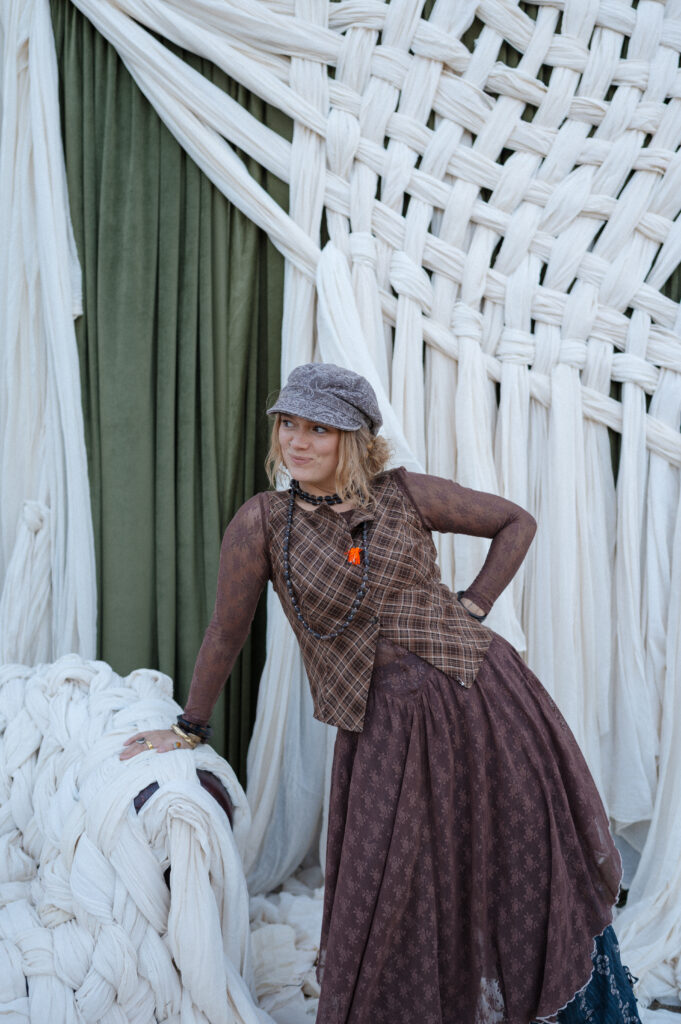
Mia Sylvia Herrod, 2018 Textile Design Graduate, named in Forbes 30 under 30
Congratulations to 2018 Textile Design graduate Mia Sylvia Herrod, who has been named in the Forbes 30 Under 30 list. This recognition highlights her achievements since graduating and celebrates her growing impact within the creative industry. -
 BA Photography •
Norwich University celebrates emerging young talent as winners of two prestigious art competitions are announced
The winners of two creative competitions – Beyond the Frame and the Norfolk Art and Design Competition – have been announced by Norwich University of the Arts. -
 BA Graphic Communication •
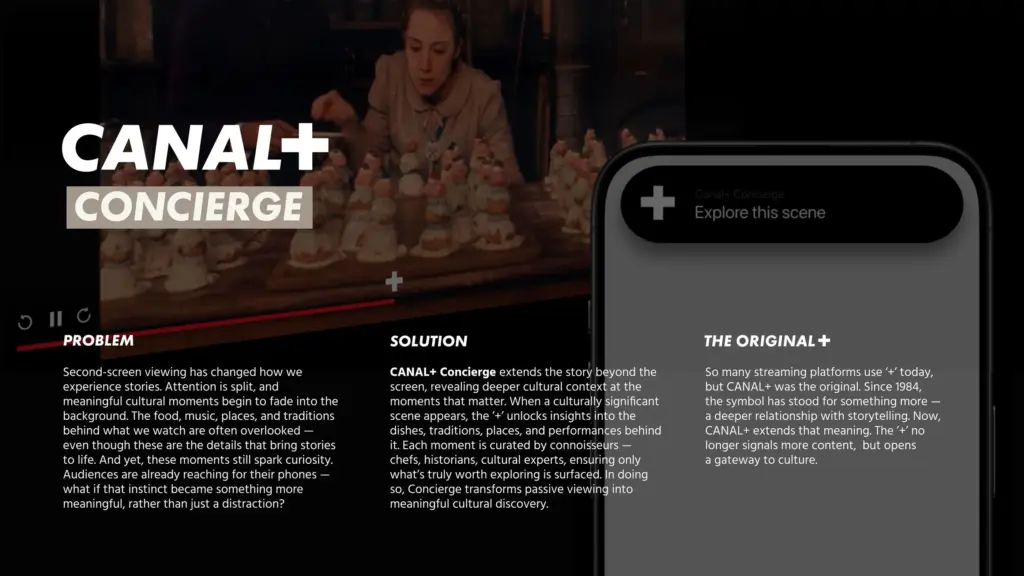
Norwich students win at D&AD New Blood Awards 2026
Students from BA (Hons) Graphic Design, BA (Hons) Graphic Communication and BSc (Hons) User Experience Design have won awards at the D&AD New Blood 2026 competition. -
 Graduation •
Norwich University to award four new Honorary Professorships
The Honorary Professorships celebrate exceptional achievement, creativity and influence across the creative industries. -
 Institution •
Norwich University of the Arts joins NCUK’s global pathway network
Norwich University of the Arts joins NCUK’s global pathway network -
 Institution •
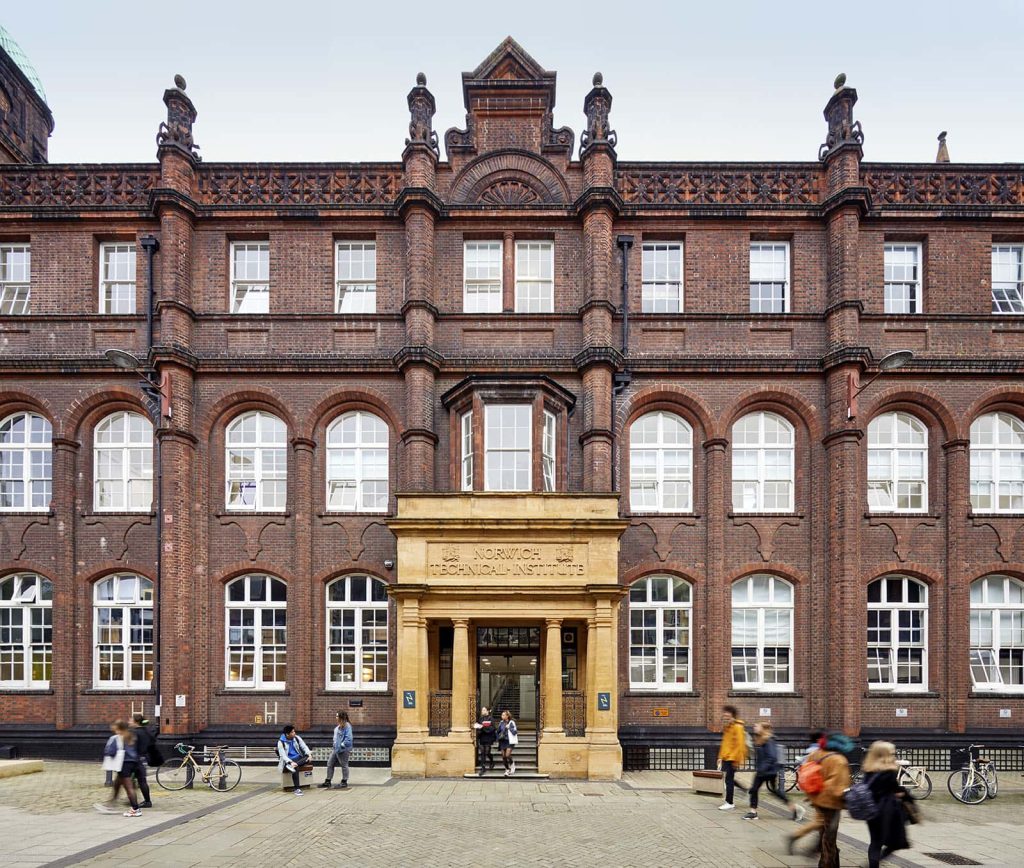
Norwich University of the Arts publishes posture on Artificial Intelligence
Norwich University of the Arts has published its posture on Artificial Intelligence (AI) for students. -
 Institution •
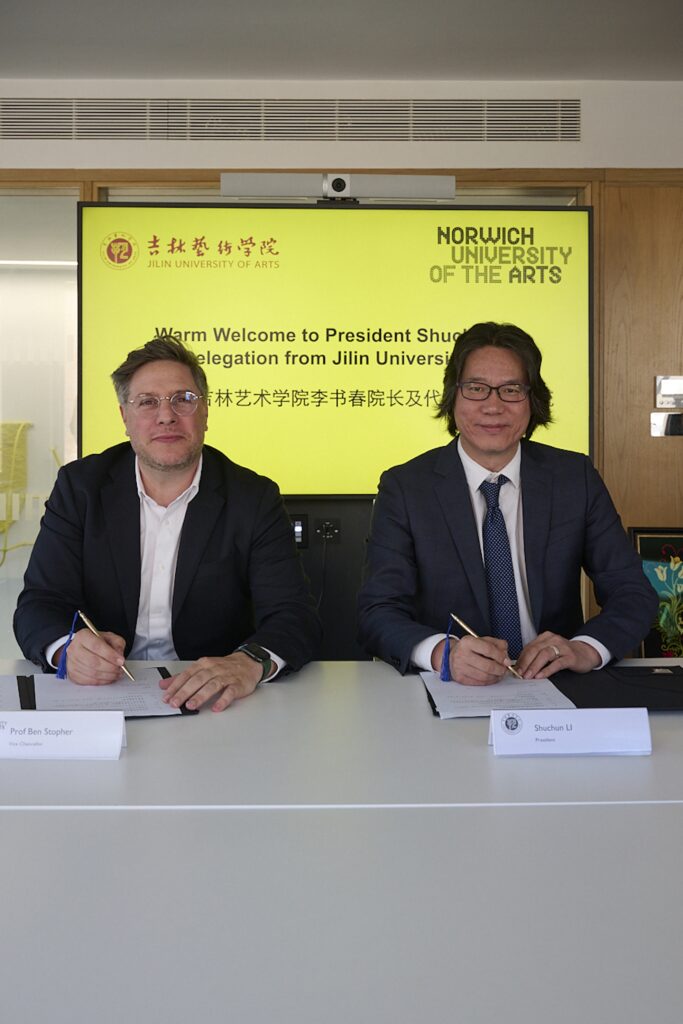
Norwich Signs Memorandum of Understanding with Jilin University of the Arts
Norwich University of the Arts has signed a Memorandum of Understanding (MoU) with Jilin University of the Arts, marking the start of a new international partnership between students and staff at both institutions. -
 BA Architecture •
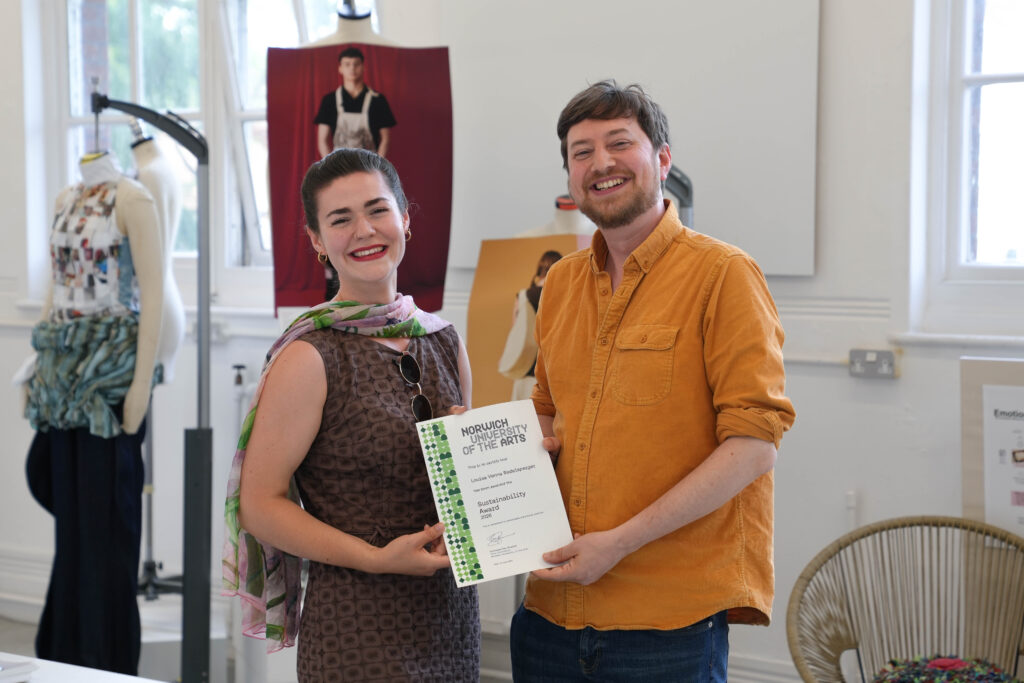
Norwich University announces winners of 2026 Undergraduate Sustainability Awards
Students from BA (Hons) Architecture, BA (Hons) Fashion, BA (Hons) Illustration and BA (Hons) Interior Design were all recognised in this year’s awards, for their commitment to sustainable and ethical practice. -
 BA Fashion •
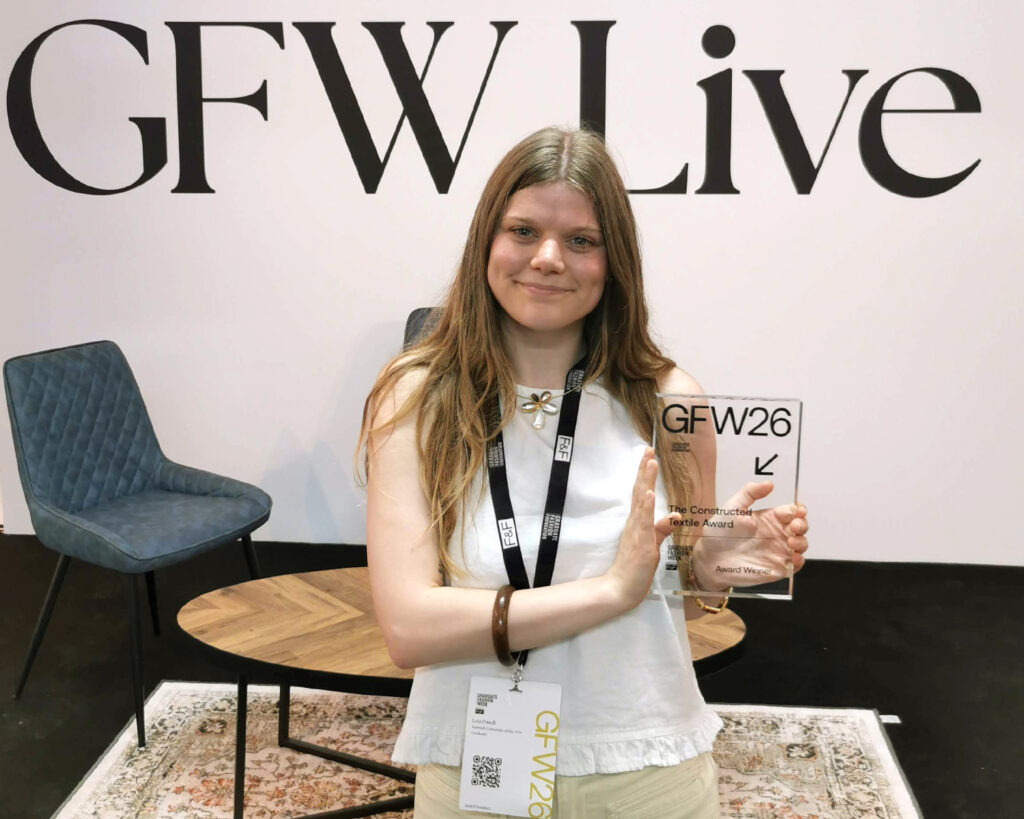
Norwich students win at Graduate Fashion Week 2026
This year’s Graduate Fashion Week has seen awards success for Norwich University of the Arts students. -
 East Gallery •
In Memoriam: Tess Jaray
In Memoriam: Tess Jaray -
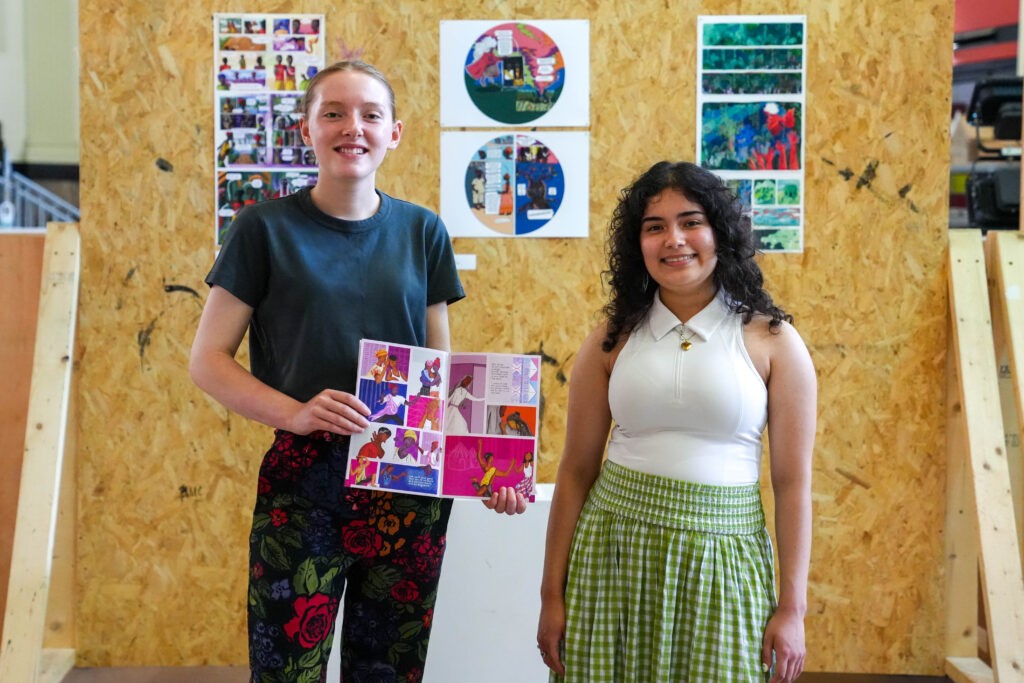 BA Illustration •
Stories of Home: Norwich Illustration students explore culture, identity and memory
Students from our BA (Hons) Illustration course have produced a striking exhibition of work, exploring community heritage and visual storytelling. -
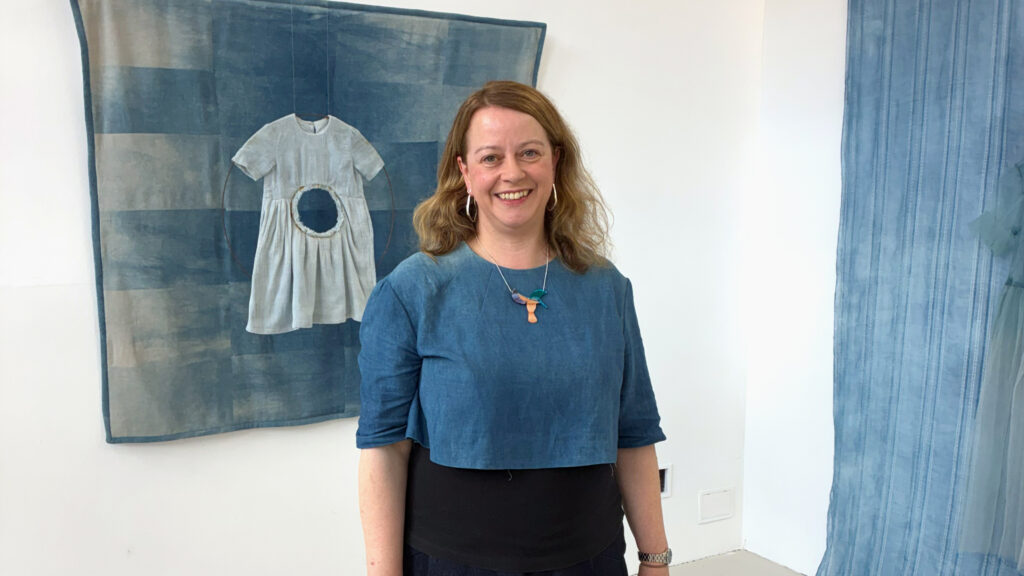 MA Textile Design •
In conversation with: Caroline Mayers, MA Textile Design
We caught up with Caroline to discuss her creative practice, her experience of studying MA Textile Design at Norwich, and what it meant to win a Sustainability Award at our annual Grad Fest event. -
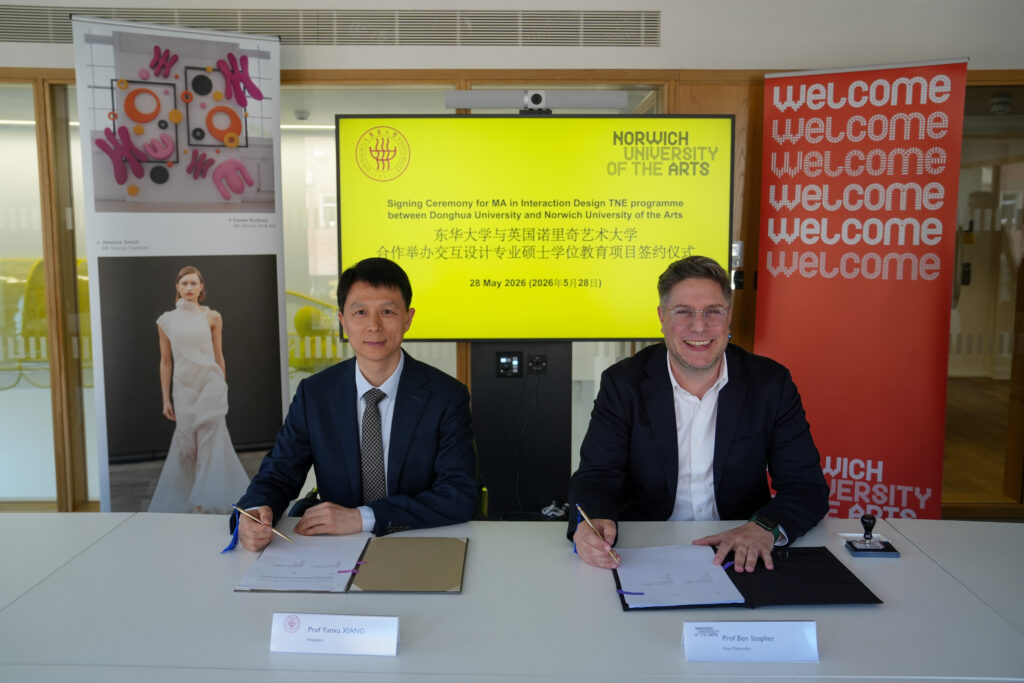 Institution •
Norwich University of the Arts and Donghua University Strengthen International Partnership
Norwich University of the Arts has signed a partnership with Donghua University in Shanghai to deliver a new MA in Interaction Design. -
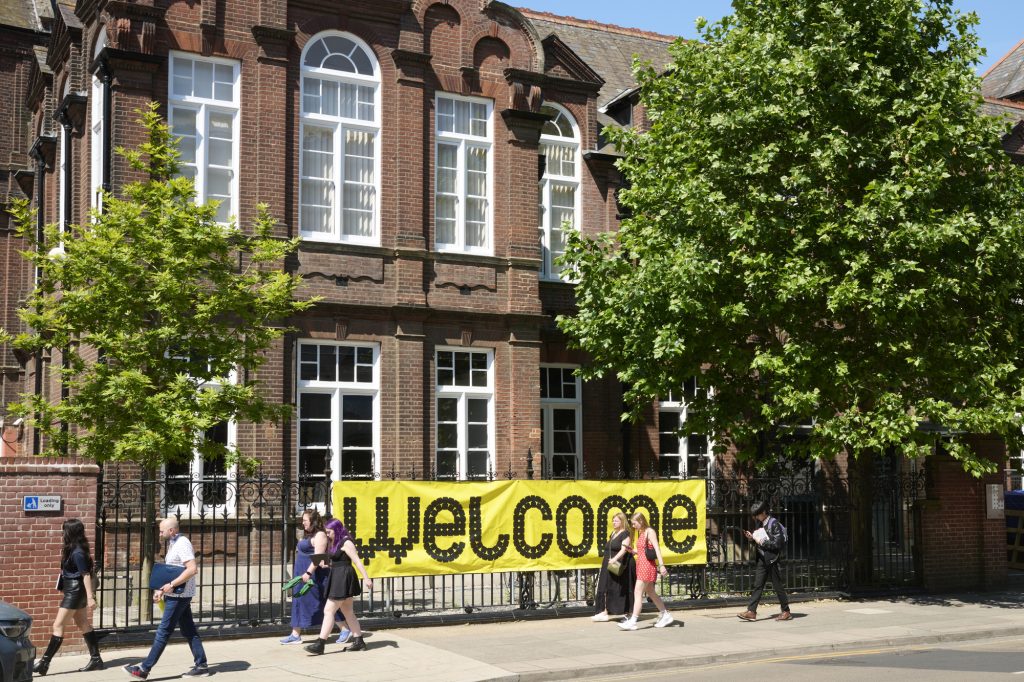
Norwich University of the Arts Ranked UK’s Top Specialist Creative Arts University in National Student Awards
Norwich University of the Arts is the UK’s highest-ranked specialist creative arts university in the Whatuni Student Choice Awards (WUSCAs) 2026, placing 14th overall among universities across the UK. -
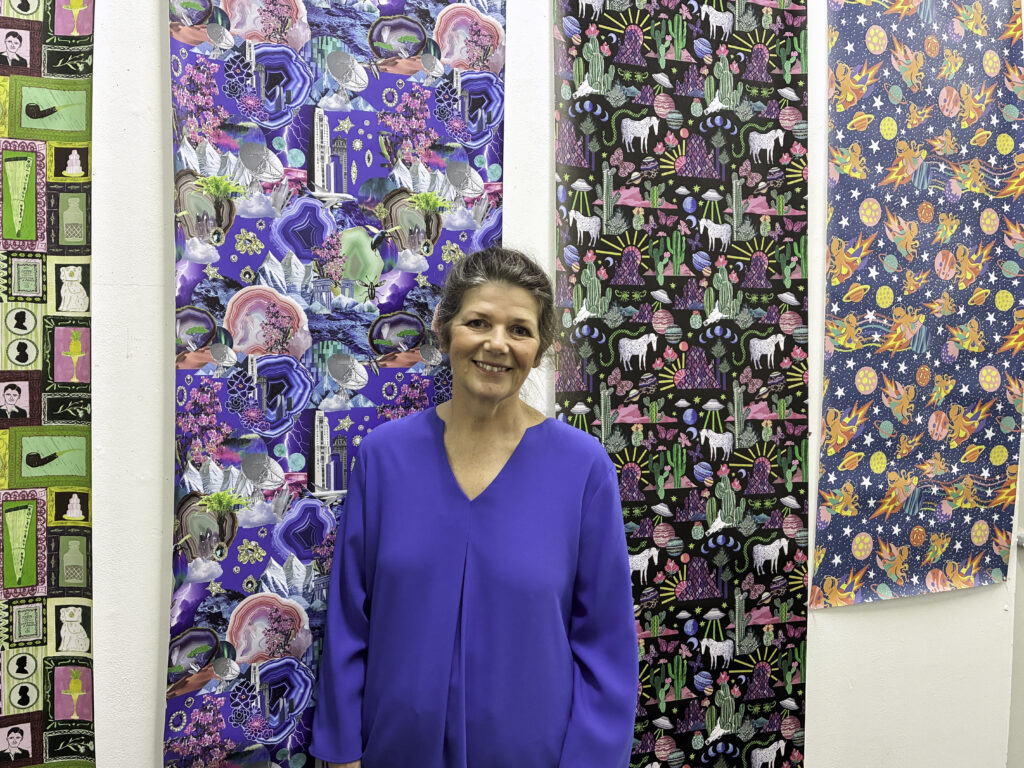 BA Textile Design •
In conversation with: Marianne Shillingford, Creative Director of Dulux UK and Ireland
We caught up with Marianne, Dulux’s Creative Director, to discuss her work with Norwich's Textile Design students and her advice for breaking into the industry. -
 Institution •
Norwich hosts visit from the Ambassador of Japan to the United Kingdom
Norwich University of the Arts welcomed Ambassador Hiroshi Suzuki to tour the university’s creative technology facilities and explore ongoing research projects.
1 / 1